| To
be an effective advocate, you need to learn about the educational techniques and
methods that are proven to work with the child's disability. Most
children with disabilities need remediation. Remediation is intensive,
structured educational training or tutoring, usually conducted one-on-one or in
very small groups.
When children receive remediation, symptoms of their
disability become less severe. Children with dyslexia learn to read, write, and
do arithmetic. Children with autism learn to communicate. Remediation is hard
work but it's worth it.
 What Every Teacher Should Know About Students With Special Needs: Promoting Success in the Classroom by Roger Pierangelo and George A. Giuliani What Every Teacher Should Know About Students With Special Needs: Promoting Success in the Classroom by Roger Pierangelo and George A. Giuliani
This easy-to-use manual is an essential resource for classroom teachers and an extremely useful reference for special educators, school psychologists, resource teachers, and administrators. It provides over 500 classroom-tested, teacher-friendly tips for helping special education students succeed in school as they face academic, social, emotional, and behavioral challenges. The authors also include guidelines for developing positive relationships with parents and for conducting effective parent-teacher conferences. Each chapter focuses on one of the following special needs areas: Learning Disabilities, Attention-Deficit/Hyperactivity Disorder, Emotional Disabilities, Speech and Language Disorders, Hearing Impairments, Visual Impairments, Orthopedic and Other Health Impairments, Traumatic Brain Injury, Developmental Disabilities, Pervasive Developmental Disorders/Autism, and Giftedness..
 No Parent Left Behind by Susan M. Brefach, Ed.D. No Parent Left Behind by Susan M. Brefach, Ed.D.
No Parent Left Behind guides parents of children with any type of special learning need through the Special Education universe. Written by a clinical psychologist with over 32 years' experience in evaluating and advocating for children, it tells parents exactly how they can help their child succeed in school. In this comprehensive, easy to read book, parents will learn how to monitor their child's early development for signs of possible difficulty; identify their child's needs within an academic setting; choose a skilled independent evaluator and get the necessary testing to document a child's current performance and needs; understand test results and testing reports; advocate for appropriate services and help craft an effective Individualized Education Program; get the most help from outside professionals, and monitor their child's progress over time.
Special
Education & Children with Disabilities
 Emotion: The On/Off Switch for Learning by Priscilla Vail Emotion: The On/Off Switch for Learning by Priscilla Vail
This is a wonderful book on the connection between learning and emotion.
Priscilla Vail is a teacher and learning specialist who is well-known throughout the world and the author of several books on language. In this book, she describes how language is used and what teachers can do to understand the ins and outs of language. She gives six specific activities for teachers. Vail also provides ten useful tips for parents, nannies, grandparents, and other concerned adults and addresses the emotional problems that kids face.
 Executive Skills in Children and Adolescents: A Practical Guide to
Assessment and Intervention by Peg Dawson, EdD and Richard Guare, PhD. Executive Skills in Children and Adolescents: A Practical Guide to
Assessment and Intervention by Peg Dawson, EdD and Richard Guare, PhD.
This highly practical manual provides a research-based framework for strengthening executive functioning in children and adolescents. The book explains how executive skills develop in children and are used in everyday life - from the self-regulation required for responsible behavior to the planning and initiation abilities needed to complete homework on time.
This volume is filled with promising practices for evaluating and improving children's executive functioning. Initially developed to target the processing problems of children with ADHD and traumatic brain injury, this approach shows potential for assisting all children in the classroom.
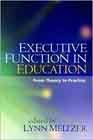 Executive Function in Education: From Theory to Practice by Lynn Meltzer, PhD Executive Function in Education: From Theory to Practice by Lynn Meltzer, PhD
This uniquely integrative book brings together leading researchers and practitioners from education, neuroscience, and psychology. It presents a theoretical framework for understanding executive function difficulties together with a range of effective approaches to assessment and instruction.
Coverage includes executive function processes in specific disorders--language-based learning disabilities, nonverbal learning disabilities, and autism spectrum disorders--as well as ways to support all students in developing vital skills for self-directed learning.
Specific teaching methods are discussed for reading, writing, and math. Scholarly and authoritative yet highly practical, the book provides guidelines for intervening at the level of the individual child, the classroom, and the entire school.
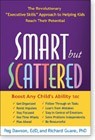 Smart but Scattered: The Revolutionary "Executive Skills" Approach to Helping Kids Reach Their Potential by Peg Dawson, EdD and Richard Guare, PhD Smart but Scattered: The Revolutionary "Executive Skills" Approach to Helping Kids Reach Their Potential by Peg Dawson, EdD and Richard Guare, PhD
Scientists who study child development have recently found that kids who are "smart but scattered" lack or lag behind in crucial executive skills-the core, brain-based habits of mind required to "execute" tasks like getting organized, staying focused, and controlling emotions.
School psychologist Peg Dawson and neuropsychologist Richard Guare have developed an innovative program that parents and teachers can use to strengthen kids' abilities to plan ahead, be efficient, follow through, and get things done.
Smart but Scattered provides ways to assess children's strengths and weaknesses and offers guidance on day-to-day issues like following instructions in the classroom, doing homework, completing chores, reducing performance anxiety, and staying cool under pressure. Small steps add up to big improvements, enabling these kids to build the skills they need to live up to their full potential. More than 40 reproducibles are included.
You,
Your Child, and 'Special' Education: A Guide to Making the System Work by
Barbara Coyne Cutler
"Must read for parents of "special" children. "I read
this book when my husband and I battled our school district for services for our
autistic son. I recommend it to the parents."
"It
not only tells you what schools can and can't do, it tells you how to get and
hold their attention and gives samples of letters, etc. We learned to have a 3rd
party witness at meetings with school representatives from this book."
How
to Reach and Teach ADD/ADHD Children: Practical Techniques, Strategies, &
Interventions for Helping Children With Attention Problems and Hyperactivity by Sandra F. Rief.
Includes
management techniques that promote on-task behavior and language arts, & multisensory
instruction strategies to maintain attention and keep students involved. Read
reviews of How
to Reach & Teach ADD/ADHD Children.
Teaching
the Tiger: Educating Students With Attention Deficit Disorders, Tourette Syndrome
or Obsessive Compulsive Disorder by Marilyn P. Dornbush and Sheryl K. Pruitt
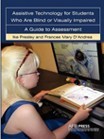 Assistive Technology For Students Who Are Blind or Visually Impaired: A Guide to Assessment by Ike Presley, M.Ed., Frances Mary D'Andrea, M.Ed. Assistive Technology For Students Who Are Blind or Visually Impaired: A Guide to Assessment by Ike Presley, M.Ed., Frances Mary D'Andrea, M.Ed.
A book on assessing the needs of kids who are blind that creates a "tech toolbox" for kids. All school districts should have this guide as a resource
Autism
Educating
Children with Autism by National Academy Press
Children with
autism have difficulty interacting with other people, communicating ideas and
feelings, and imagining what other people think or feel. Although education is
the main form of treatment, many educators are poorly equipped to deal with these
children. This book focuses on effective educational practices, programs, and
strategies. In
Educating
Children with Autism, you learn:
· How children's specific diagnoses
should affect educational assessment and planning
· How to support
the families of children with autism
· Features of effective instructional
and comprehensive programs and strategies
· How to better prepare
teachers, school staffs, professionals, and parents to educate children with autism.
Pete has used this book as an exhibit in autism cases.
Central
Auditory Processing Disorders - Mostly Management by Gay Masters, Nancy
Stecker, Jack Katz (ed.) Pamela
Martens, SLP from San Diego writes: "There is a wonderful book that I HIGHLY recommend
for professionals and parents - Central
Auditory Processing Disorders-Mostly Management. "It
gives the reader an overview of CAPD, neuroscience background and the relationship
between CAPD and ADHD. The book covers a variety of strategies and approaches
to remediation. This is an incredible resource. Very approachable reading too."
More information about Central
Auditory Processing Disorders.
How
to be a Para-Pro: A Comprehensive Training Manual for Paraprofessionals by
Diane Twachtman-Cullen.
This practical manual is filled with tips and strategies
to help the paraprofessional handle problems and challenges. Learn about the 4
categories of educational support; a blueprint for adjusting caregiver support;
how to solutions to problem situations; take home messages, includes reproducible
data and record keeping forms, more.
The
author of Reality Therapy argues that we can save our schools only by retooling
the way we teach. "Effective teaching may be the hardest job there is."
"We need to squeeze
all blame, all coercion and all criticism out of people-related business. Not
until we realize that schools are in a people business will we ever be able to
make meaningful changes." This
book should be required reading by every school administrator, teacher,
board member and university faculty involved in the training of teachers.
Information about The
Quality School. |
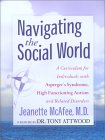 Navigating the
Social World: A Curriculum for Individuals with Asperger's Syndrome, High
Functioning Autism and Related Disorders by Dr. Jennie McAfee. Navigating the
Social World: A Curriculum for Individuals with Asperger's Syndrome, High
Functioning Autism and Related Disorders by Dr. Jennie McAfee.
A superb resource for parents and professionals...it provides clear and thorough cognitive behavioral programs for working with children to develop social life skills.
Incredibly thorough and well-organized resource that brings together a wealth of information for families and educators...straight-forward.
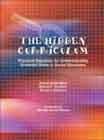 The Hidden Curriculum: Practical Solutions for Understanding Unstated Rules The Hidden Curriculum: Practical Solutions for Understanding Unstated Rules
in Social Situations by Brenda Smith Myles, Melissa L. Trautman, and Rhonda L. Schelvan
This remarkable guidebook is invaluable for helping persons with social-cognitive difficulties make sense of unspoken rules and expectations that govern how we interact with others in everyday life. In a well-written, straightforward and friendly style, the authors provide excellent insights and sensible tools that draw from a wealth of research and experience.
A must for all the parents of children who struggle with day-to-day situations, it includes many wonderful tips that can make all the difference for a child with an autistic spectrum disorder.
Reading
& Writing
 School Success for Kids with Dyslexia and other Reading Disabilities by William E. Dunson, Ph.D. School Success for Kids with Dyslexia and other Reading Disabilities by William E. Dunson, Ph.D.
This book provides parents and teachers with goals that will meet the needs of students who are struggling with reading, leading them to work through their reading difficulties and enjoy the task of reading. It includes information, assessments, and techniques that parents, teachers, and school administrators can use immediately to foster reading success. The book covers topics such as how English words are constructed, how the brain processes language, the differences that exist between learning styles, how emotions can affect reading difficulties and how technology can be used to help students and provides handy tips for parents to implement at home to help their struggling students find success.
Straight
Talk About Reading: How Parents Can Make a Difference During the Early Years
by Susan Hall, Louisa Moats, and Reid Lyon.
"Children's
needs shouldn't take a back seat to adult professional egos."
"Best practices"
in education, as in other fields, should not only be reasonable but mandatory."
"Parents must know,
understand and advocate for 'good instruction'. Teaches parents about reading
research -- a 'reader friendly' way to get acquainted with proven research based
methods of reading instruction." Read reviews
of Straight Talk About Reading
Parenting
a Struggling Reader by Susan Hall and Louisa Moats Because
parents and children lose valuable years waiting for school systems to test for
reading disability, Hall and Moats offer a program for getting parents involved
in their children's reading lives. This book provides a four-step plan for identifying
and resolving deficiencies, and advice for those whose kids received poor instruction
during the early years.
Overcoming
Dyslexia: A New and Complete Science-Based Program for Overcoming Reading Problems
at Any Level by MD Sally Shaywitz
Dr. Shaywitz demystifies reading difficulties and explains how
a child can be helped to become a good reader. She instructs parents in what they
can do year-by-year, grade-by-grade, step-by-step for a dyslexic child.
She lays out a home program for enhanced reading; guides parents in choosing the
best school for their child and in working with teachers; and suggests ways of
raising and preserving the child’s self-esteem. She provides exercises, teaching
aids, information on computer programs, and many other invaluable resources.
Speech
to Print: Language Essentials for Teachers by Louisa Cook Moats
This thorough,
well-written book ties theory to classroom practice, transcribing the process
of learning how to read - from speech to print! Working through the exercises
will enable you to recognize, understand, and solve problems that children encounter
when learning to read and write.
Dyslexia:
Theory & Practice of Remedial Instruction by Diana Brewster Clark and Johanna
Kellogg Uhry. Dr.
Margaret Kay, Pennsylvania Psychologist and Nationally Certified School Psychologist
gives high marks to Dyslexia:
Theory & Practice of Remedial Instruction.
Memory
 The
Memory Book by Harry Lorayne and Jerry Lucas. The
Memory Book by Harry Lorayne and Jerry Lucas.
Many
kids with LD/ADD problems have poor memories. Nothing anyone can do about it -
right? Wrong!
Being
born with a poor memory doesn't mean having to live with a poor memory forever.
It means that you need to learn techniques to improve your memory - and
practice these techniques until they are automatic. Harry
Lorayne describes a simple system to strengthen poor memories. This system
is based on visualization. His system works because most people who have
poor memories learn and remember when things are presented visually. Here are
three good books by Harry Lorayne. Try one - just one!
How
to Develop a Superpower Memory: More Money, Higher Grades, More Friends by
Harry Lorayne.
Harry
Lorayne's Page-A-Minute Memory Book
Restraint and Seclusion
 Preventing Physical Restraints in Schools: A Guide for Parents, Educators &
Professionals by Scott F. Johnson, Esq. Preventing Physical Restraints in Schools: A Guide for Parents, Educators &
Professionals by Scott F. Johnson, Esq.
The book provides resources to help parents, educators and other professionals understand the legal requirements and safety risks regarding physical restraints.
This one of a kind resource provides answers to questions along with suggestions to help meet legal requirements and protect the health and safety of students and staff. It includes information about:
physical restraints and aversives, positive behavioral interventions and supports, health and safety risks of using physical restraints, steps to take to help reduce risks, and legal requirements for using restraints in schools under IDEA and Section 504.
It also provides resources, suggestions for school staff and training, sample school policies and forms, and suggestions for parents.
Twice Exceptional (2e) Children
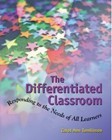 The Differentiated Classroom: Responding to the Needs of All Learners The Differentiated Classroom: Responding to the Needs of All Learners
by Carol Ann Tomlinson.
How teachers can divide their time, resources, and efforts to effectively instruct so many students of diverse backgrounds, readiness and skill levels, and interest.
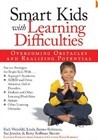
Smart Kids with Learning Difficulties: Overcoming Obstacles and Realizing Potential
by Rich Weinfeld, Sue Jeweler, Linda Barnes-Robinson, and Betty Shevitz.
An engaging must read of any parent, teacher or counselor of smart kids who face learning difficulties.
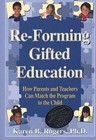
Re-Forming Gifted Education: How Parents and Teachers Can Match the Program to the Child
by Karen B. Rogers.
To meet the learning needs of gifted children, a school should match the program to the child's specific traits and abilities.
Dr. Rogers shows us how.
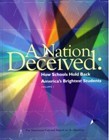
A Nation Deceived: How Schools Hold Back America's Brightest Students Volumes 1 and 2
by Nicholas Colangelo (2004).
The Templeton National Report on Acceleration.
Volumes 1 and 2.
Inspiring Middle School Minds: Gifted, Creative, and Challenging
by Judy Willis
Dr. Willis, a neurologist and middle school teacher explain the inner workings of the adolescent brain and explains how parents and teachers can inspire individual students to fully "activate" their brains.
 Asperger Syndrome and Adolescence: Helping Preteens and Teens Get Ready for the Real World by Teresa Bolick. Asperger Syndrome and Adolescence: Helping Preteens and Teens Get Ready for the Real World by Teresa Bolick.
Finally! Information for parents and teens! In her book, Dr. Bolick clearly explains the challenges facing older children with Asperger Syndrome and offers practical advice which can easily be utilized by the parents, educators, and therapists who work with them. Recommended not only for parents and professionals who work with teens with AS, but also for parents of younger children who wish to glimpse into the future. |