|
|
|
|
|
|
Transition, Transition Services, Transition Planning
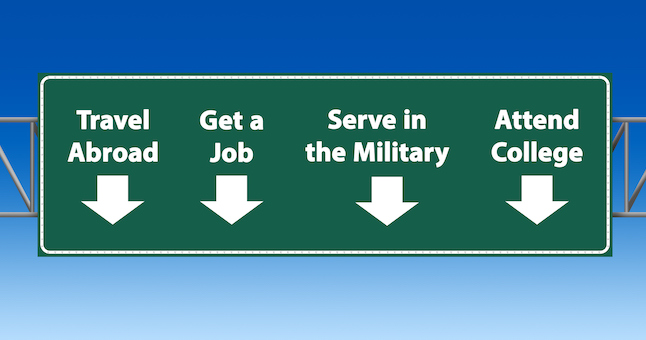
IEP Teams tend to overlook the possibilities of transition plans as opportunities. Parents need to educate themselves about the requirements for transition assessments, plans, and services.
Think About Transitions as Opportunities
Find Your Dream Job: Know Your Interests, Aptitudes and Personality. Pete Wright shares his personal experiences with vocational assessments and adds "Before you try to create a treatment plan, get the data first.” Transition Assessments: What is My Parental Role? Few parents and educators know the legal requirements for transition plans and assessments. IDEA requires your child's IEP team to use age-appropriate transition assessments to determine each child's transition needs. You are the expert on your child so you need to share info about your child's strengths and interests with the IEP team. Certificate Instead of Diploma - Is This OK? Your child is eligible for special education until he graduates from high school with a *regular high school diploma* or ages out at age 22. Do not accept a certificate. A certificate is meaningless and will not help him get a job, get further education or be self sufficient and independent. Transition Planning: Setting Lifelong Goals -- Jennifer Graham and Peter Wright, Esq. offer advice and checklists that will help your child make a successful transition from school to employment or further education. Making the Transition from School to Work by Sue Whitney. IEPs for Success by Dr. Barbara Bateman includes extensive discussion of transition and transition plans. IDEA Funds for Postsecondary Programs - While Still in High School. IDEA funds can be used for dual enrollment, comprehensive transition and other postsecondary education programs for students and youth with disabilities. Termination Before Transition: Is This a Good Plan for Your Child? Don't allow the school to terminate your child's special education eligibility unless and until you are convinced that they are functioning well, can get a good job, and pursue further education if he wants to. Transition: Summary of Performance (SOP) When your child graduates from high school with a regular diploma or "ages out" of special education, IDEA requires the school to provide a “summary of academic achievement and functional performance" to help with the transition. Establishing Exit Criteria for a 20 Year Old Student. There are no clear, specific standards that establish exit criteria for a 20 year old student -- except for a regular high school diploma. Absent that, exiting is not an option. Transitional Programs on College Campuses or in the Community. Find out what IDEA says ...“Part B funds can be used for student ‘participation in transitional programs on college campuses or in community-based settings. . ." We Need a Transition Plan with "Hands-On" Experience. Transition planning is an IEP team responsibility. Like other services in the IEP, transition services should be based on your son’s needs, not what the school has available. The IEP for Transition Age Students. Excellent information about IEPs for "transition-aged students." Learn about transition requirements, members of the IEP transition team (including student and parents), special factors for the IEP team to consider (National Center on Secondary Education and Transition and The Pacer Center). Transition Plans: Thinking Out of the Box IEP Teams tend to overlook the possibilities of transition plans as opportunities. Parents need to educate themselves about the requirements for transition assessments, plans, and services. When you find useful publications about transition, try to get an extra copy to share with your IEP team. Transition Guide to Postsecondary Education and Employment for Students and Youth with Disabilities. The IDEA and the Rehabilitation Act make clear that transition services require a coordinated set of activities for each student with a disability in an outcome-oriented process. This process is intended to promote each child's movement from school to post-school activities that include postsecondary education, vocational training, and competitive integrated employment. (Office of Special Education and Rehabilitative Services, January 2017) LDAdvisory.com. Helping students with disabilities successfully transition to college. Transition of Students with Disabilities to Postsecondary Education: A Guide for High School Educators (March 2011). This document provides high school educators with answers to questions students with disabilities may have as they prepare to move to the postsecondary education environment. Parents Guide to Transition. This article will increase your knowledge and provide tools to help you prepare for your child’s transition from K-12 education to postsecondary education and life as a young adult. The Guideposts for Success for Youth. What all youth need to successfully transition into adulthood from the Office of Disability Employment Policy (ODEP). Based on an extensive literature review of research, demonstration projects and effective practices covering a wide range of programs and services, including youth development, quality education, and workforce development programs. Workforce Recruitment Program. Coordinated by the Office of Disability Employment Policy (ODEP) and the U.S. Department of Defense, the WRP is a recruitment and referral program that connects federal and private sector employers with highly motivated postsecondary students with disabilities who are eager to prove their abilities in the workplace through summer or permanent jobs. What's Health Got to Do With Transition? (2005) from Healthy and Ready to Work by Patti Hackett, MEd, National Center for Secondary Education and Transition. Transition to Adulthood from the Center for Parent Information and Resources (CPIR). Charting a Course for the Future - a Transition Toolkit from the Colorado Department of Education. Transition to School and Work: A blueprint for your child's success after high school a brochure on transition planning for parents from the National Joint Committee on Learning Disabilities (NJCLD). Youth Information, Training, and Resources - Center for Self-Advocacy Leadership (CSAL) Virginia. The Center for Self-Advocacy Leadership (CSAL) provides information, training, and resources to increase self-advocacy leadership skills in youth and young adults with disabilities (ages 13 to 30) who are emerging leaders. Transition Topics to help you understand the transition process from the National Collaboration on Workforce and Disability. Transition Terminology. A Glossary of transition terms from CDE. Transfer of Rights for Students with Disabilities upon Reaching the Age of Majority in Virginia. Technical Assistance Resource Document (Virginia 2015). Includes a sample Power of Attorney letter in Appendix B. The phrase "further education" and the emphasis on effective transition services is new in IDEA 2004. Section 1400(c)(14) describes the need to provide "effective transition services to promote successful post-school employment and/or education. (See "Findings and Purposes" in Wrightslaw: Special Education Law, 3rd Edition, page 90) Transition to Adulthood Guidelines for Individuals with ASD. The OCALI Guidelines for Transition will help the user understand these challenges and raise awareness of these important considerations from OCALI.
Moving On to High School: A Tip Sheet for Parents of Children on Individualized Education Programs - Transition to 8th grade from the Institute for Community Inclusion, University of Massachusetts Boston. Secondary
to Postsecondary Education Transition Planning for Students with Learning Disabilities
- National Joint Committee on Learning Disabilities. College-bound
students need to learn self-advocacy skills - how to present information about
their disability and accommodations so professors are willing to help. If students
master these skills, they are far more likely to make a successful transition
from high school to college. Letter to Parents from the U.S. Department of Education, Office for Civil Rights (OCR) about changes students with disabilities encounter as they make the transition from high school to postsecondary education. Postsecondary institutions have significantly different responsibilities from those of school districts. This letter provides examples of the unique relationship between postsecondary institutions and students with disabilities. Students
with Disabilities Preparing for Postsecondary Education: Know Your Rights and
Responsibilities (U. S. Department of Education). Short booklet
for students who plan to continue their education after high school; includes
questions and answers about admissions, accommodations & academic adjustments,
documentation, evaluations, and discrimination under Section 504 of the Rehabilitation
Act. In html
Learn
more about Section 504,
ADA and life after school. This is the time for high school seniors to visit college campuses and get a head start on their college applications. Learn about financial aid for students with learning disabilities. Transition Life Beyond the Classroom: Transition Strategies for Young People with Disabilities, Fifth Edition (2012) by Paul Wehman Vocational & Technical Schools--East 9th Editon College and Continuing Education Accommodations in Higher Education under the Americans with disabilities Act: A No-Nonsense Guide for Clinicians, Educators, administrators, and Lawyers by Michael Gordon and Shelby Keisern Colleges for Students with Learning Disibilities or ADD (Peterson's) College And Career Success For Students With Learning Disabilities Survival Guide for College Students with ADHD or LD by Kathleen G. Nadeau Going To College: Expanding Opportunities For People With Disabilities (Paperback) by Elizabeth Evans Getzel and Paul Wehman (Editors) Succeeding in College With Asperger Syndrome by John Harpur, Maria Lawlor, Michael Fitzgerald Realizing the College Dream With Autism or Asperger Syndrome: A Foundations of Transition for Young Children - Effective Transition Practices in Early Childhood. Transition of Young Children in Early Childhood Programs from CONNECT: The Center to Mobilize Early Childhood Knowledge from the Child Development Institute at UNC. This training module is about transition from Part C of IDEA (infants and toddlers- birth to three) to Part B (young children - three to six) programs. More about Early Childhood - Early Intervention Directory of Topics
|
||||||||||||||||||||||||