|
|
The Special Ed Advocate newsletter
It's Unique ... and Free! |
|
|
|
2026
Training Programs |
March 12, 2026 - Long Island, NY
March 26, 2026 - San Antonio, TX
May 9, 2026 - WV via ZOOM
July 7, 2026 - Buffalo, NY
Sept. 17, 2026 MD via ZOOM
Full Schedule
|
|
Wrightslaw |
|
Home
About Pete
About Pam
Topics from A-Z
Free Newsletter
Seminars & Training
Yellow Pages for Kids
Press Room
FAQs
Sitemap |
|
Books & Training |
|
Wrightslaw Store
Advocate's Store
Student Bookstore
Exam Copies
Training Center
Mail & Fax Orders |
Advocacy Library |
Articles
Cool Tools
Doing Your Homework
Ask the Advocate
FAQs
Newsletter Archives
Short Course Series
Success Stories
Tips
|
Law Library |
Articles
Caselaw
Fed Court Complaints
IDEA 2004
McKinney-Vento Homeless
FERPA
Section 504
|
Topics |
Advocacy
ADD/ADHD
Allergy/Anaphylaxis
American Indian
Assistive Technology
Autism Spectrum
Behavior & Discipline
Bullying
College/Continuing Ed
Damages
Discrimination
Due Process
Early Intervention (Part C)
Eligibility
Episodic, such as
Allergies, Asthma,
Diabetes, Epilepsy, etc
ESSA
ESY
Evaluations
FAPE
Flyers
Future Planning
Harassment
High-Stakes Tests
Homeless Children
IDEA 2004
Identification & Child Find
IEPs
Juvenile Justice
Law School & Clinics
Letters & Paper Trails
LRE / Inclusion
Mediation
Military / DOD Parental Protections
PE and Adapted PE
Privacy & Records
Procedural Safeguards
Progress Monitoring
Reading
Related Services
Research Based Instruction
Response to Intervention (RTI)
Restraints / Seclusion and Abuse
Retention
Retaliation
School Report Cards
Section 504
Self-Advocacy
Teachers & Principals
Transition
Twice Exceptional (2e)
VA Special Education |
Resources & Directories |
Advocate's Bookstore
Advocacy Resources Directories
Disability Groups
International
State DOEs
State PTIs
Free Flyers
Free Pubs
Free Newsletters
Legal & Advocacy
Glossaries
Legal Terms
Assessment Terms
Best School Websites |
| |
|
The Special Ed Advocate:
Special Factors: Does the IEP Meet All Your Child's Needs?
by Wrightslaw
Print this page
Good Friday morning! In this issue of The Special Ed Advocate, we look at "special factors" that affect children's ability to learn, but are often overlooked when IEP Teams develop IEPs. Today's issue is a 2-minute read (490 words).
These special factors include:
- Behavior
- Limited English Proficiency
- Communication Needs
- Deaf / Hearing Impairment
- Blindness / Visual impairment
- Assistive technology
If one or more of these special factors are relevant to your child, you need to know what the IEP Team is required to do.
Special Factors in IEPs: Does the IEP Meet All Your Child's Needs? describes what your IEP Team is required to do when developing IEPs for children with these special factors.
The Special Factors Pop-Up Tool answers your frequently asked questions about special factors and the legal requirements for addressing special factors in IEPs.
1. Special Factors: Does the IEP Meet All Your Child's Needs?
The IDEA requires IEP teams to determine if any of these factors are relevant for the child and, if so, to address the factor(s) in the child's IEP.
Special Factors include:
- Behavior: If your child's behavior interferes with his learning or the learning of others, the team must devise strategies to address this behavior.
- Limited English Proficiency: If your child has limited proficiency in English, the IEP must consider the child's language needs as the needs relate to the child’s IEP.
- Communication Needs: Many communication disorders negatively affect the child's ability to communicate with teachers and classmates. The IEP Team is required to address these needs.
- Deafness / Hard of Hearing: If your child is deaf or hard of hearing, the IEP team must identify her language and communication needs, opportunities to communicate with classmates and school staff, academic levels, and opportunities for direct instruction in her language and communication mode.
- Blindness / Visual Impairment: If your child is blind or visually impaired, the IEP team must provide for instruction in Braille or the use of Braille, unless the Team determines -- after an appropriate evaluation -- that your child does not need instruction in Braille.
- Assistive technology: The IEP team is required to consider each child's need for assistive technology devices and/or services.
Go deeper: Special Factors: Does the IEP Meet All Your Child's Needs?
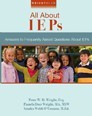
2. Wrightslaw: All About IEPs - Download a Free Chapter!
In Wrightslaw: All About IEPs (ISBN: 978-1-892320-20-9, 192 pages, perfect bound), we answer more than 200 questions and guide you through realistic scenarios.
Learn what the law says about:
- IEP Teams and IEP Meetings
- Parental Rights & Consent
- Steps in Developing the IEP
- Placement, Transition, Assistive Technology
- Strategies to Resolve Disagreements
Download a Free Chapter! Chapter 1. Getting Started
Table of Contents
All About IEPs Print Book - $12.95
All About IEPs Combo: Print Book + PDF Download - $19.95
Digital Edition! Kindle - $7.95
Digital Edition! ePub (for iPad) - $7.95
What's In Store at Wrightslaw? Take a look!
Discounts
Bulks orders (units of 20 or more) of Wrightslaw: All About IEPs are available at discounts of 20% to 50%.
1-9 books: $12.95
0-19 books (20% discount): $10.36
20-99 books (40% discount): $7.77
100+ books (50% discount): $6.48
Inside every Wrightslaw book, you'll find answers to questions, increase your knowledge,
and sharpen your skills.
Created: 04/14/21
Revised: 00/00/00
ZZZ
|
QQQ
|