|
|
|
|
|
Learn About a Free Appropriate Public Education (FAPE) Under the IDEA Under the IDEA, public schools are required to provide each child with a disability with a free appropriate public education (FAPE) in the least restrictive environment, at no cost to the child's parents.
In addition to the information on this page, we encourage you to review information on these related topics:
We also suggest that you visit the Main
Topics page.
Guidance on FAPE: IEP Goals Must Be Aligned with Grade Level State Academic Content Standards
Who is Responsible for Providing FAPE? In this article, you will learn about the "free, appropriate public education " (FAPE) your child is entitled to under the Individuals with Disabilities Education Act, who is responsible for providing a free, appropriate public education and how it is delivered. You will also learn strategies you can use if you have a disagreement with your child's IEP team.
How
Can I Get the School to Provide an Appropriate Program?
Read
one parent's journey from emotion to advocacy as she lobbies for the
services her son needs. Should
I Allow the School Retain My Child? Advice to a parent's frequently
asked questions about retention - generally, it is not a good idea. To
Promote or Retain? Summary of research on retention which
shows that retention is not an appropriate intervention for
children who have academic delays. Homebound Services: Two Hours a Week = FAPE? The IEP controls the services, regardless of where they are delivered - at home or in the public school When a School Refuses to Protect a Child with Life-Threatening Allergies. A complaint filed alleging that the child on the basis of her disabilities, was denied a free and appropriate public education that addressed her needs, and failed to ensure a safe educational environment. Individualized Instruction is Not One-Size-Fits All. You are right. A program the school considers “good”may not be adequate for every child, depending on the child’s needs.The bottom line is the child has a right to a free appropriate public education (FAPE). What Does "swine flu" Have to do with FAPE? Guidance from US Dept of Education addresses the obligations of, and best practices for, state agencies and local schools with regard to the requirements for providing FAPE for children with disabilities when planning for an H1N1 outbreak. To Top
Accommodations
and Modifications. Some children with disabilities need accommodations
and modifications in their special education programs. This 4 page printer-friendly
article defines accommodations and modifications and gives examples
for books, curriculum, instruction, assignments, and behavior. Free Appropriate Public Education for Students with Disabilities: Requirements Under Section 504 of the Rehabilitation Act of 1973. (Rev. September 2007). This pamphlet answers the following questions about FAPE: Who is entitled to a free appropriate public education? How is an appropriate education defined? How is a free education defined? In Endrew F. v Douglas County (March 22, 2017), Chief Justice Roberts explains that SCOTUS is not reversing the old Rowley standard, but - if a child is not fully integrated in the regular classroom, the focus on FAPE shifts even more to the “unique circumstances of the child." Read the analysis.
Evans
v. Rhinebeck: Your Roadmap to FAPE. How do judges determine if a
child is receiving
FAPE? Learn about procedural and substantive issues, educational
benefit, and how to use test scores to show educational
benefit. IDEA
Requirements: Least Restrictive Environment (LRE) & FAPE. The
IDEA includes two fundamental requirements: that the child receive a
free appropriate public education (FAPE) in the least restrictive environment
(LRE). What does least restrictive environment mean? What is mainstreaming?
Unilateral
Graduation & Compensatory Education: Kevin T. v. Elmhurst. Court
finds that school district did not provide a FAPE, attempted to unilaterally
graduate child, orders compensatory education.
Tests
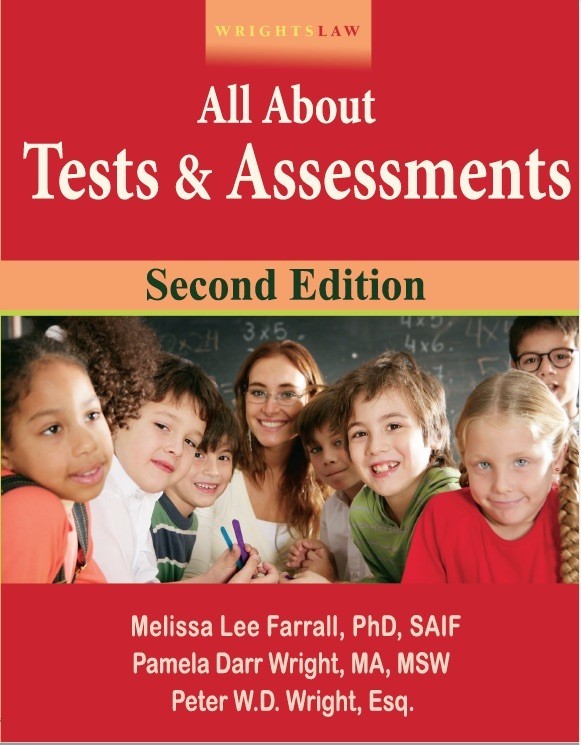
and Measurements for the Parent, Teacher, Advocate & Attorney.
Because FAPE describes a program that is designed to meet the child's
unique needs and from which the child receives educational benefit,
you need to understand test scores and what your child's test scores
mean. The
Untold Story - Florence County School District IV v. Shannon Carter.
The inside story of the Shannon
Carter case from due process, appeals, to oral argument before
the U. S. Supreme Court.
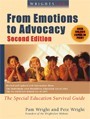
New Developments in Free, Appropriate Public Education for Students with Disabilities: Policy and Practice Implications by Mark Weber. April 2016. From Emotions to Advocacy - The Special Education Survival Guide Our
advocacy book, Wrightslaw:
From Emotions to Advocacy - The Special Education Survival Guide, 2nd Edition ,
is published by Harbor
House Law Press. Use the links below to preview the book. To order The
legal concept of “FAPE” is shorthand for “free, appropriate
public education.” You will find FAPE defined in the Individuals
with Disabilities Education Act (IDEA) at 20 U. S. C. § 1401(3)(A)(9)
(Wrightslaw:
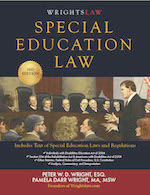
Special Education Law, 2nd Edition, page 51) and in the Code of Federal
Regulations at 34 C.F.R. § 300.17 (Wrightslaw:
Special Education Law, 2nd Edition, page 196). In a
nutshell, FAPE is an individualized educational program that
is designed to meet the child's unique needs and from which
the child receives educational benefit, and prepares them for further education, employment, and independent living. How
can you tell if your child is receiving educational benefit? If you
compare the child's educational achievement test scores over time,
you will know if your child is receiving educational benefit. Bd.
Ed. Hendrick Hudson Sch. Dist. v. Amy Rowley
The first special education decision from the U. S. Supreme Court in 1982
defines FAPE. Walczak
v. Florida Union Free School Dist. (2nd Cir. 1998). Loving parents
want what's best for child but school need only provide an appropriate
education. T.
R. v. Kingwood Township (NJ) (3rd Cir. 2000) Clarifies requirement
to provide a "free appropriate education (FAPE)" in the "least restrictive
environment, meaningful benefit, continuum of placements.
Kevin
T. v. Elmhurst Comm. School Dist. (N.D. IL 2002) Witness credibility,
failure to review and revise IEP goals and objectives, regression of skills,
assistive technology, statewide assessments, transition plans, unilateral
graduation, and compensatory education as a remedy when a school district
fails to provide a FAPE.
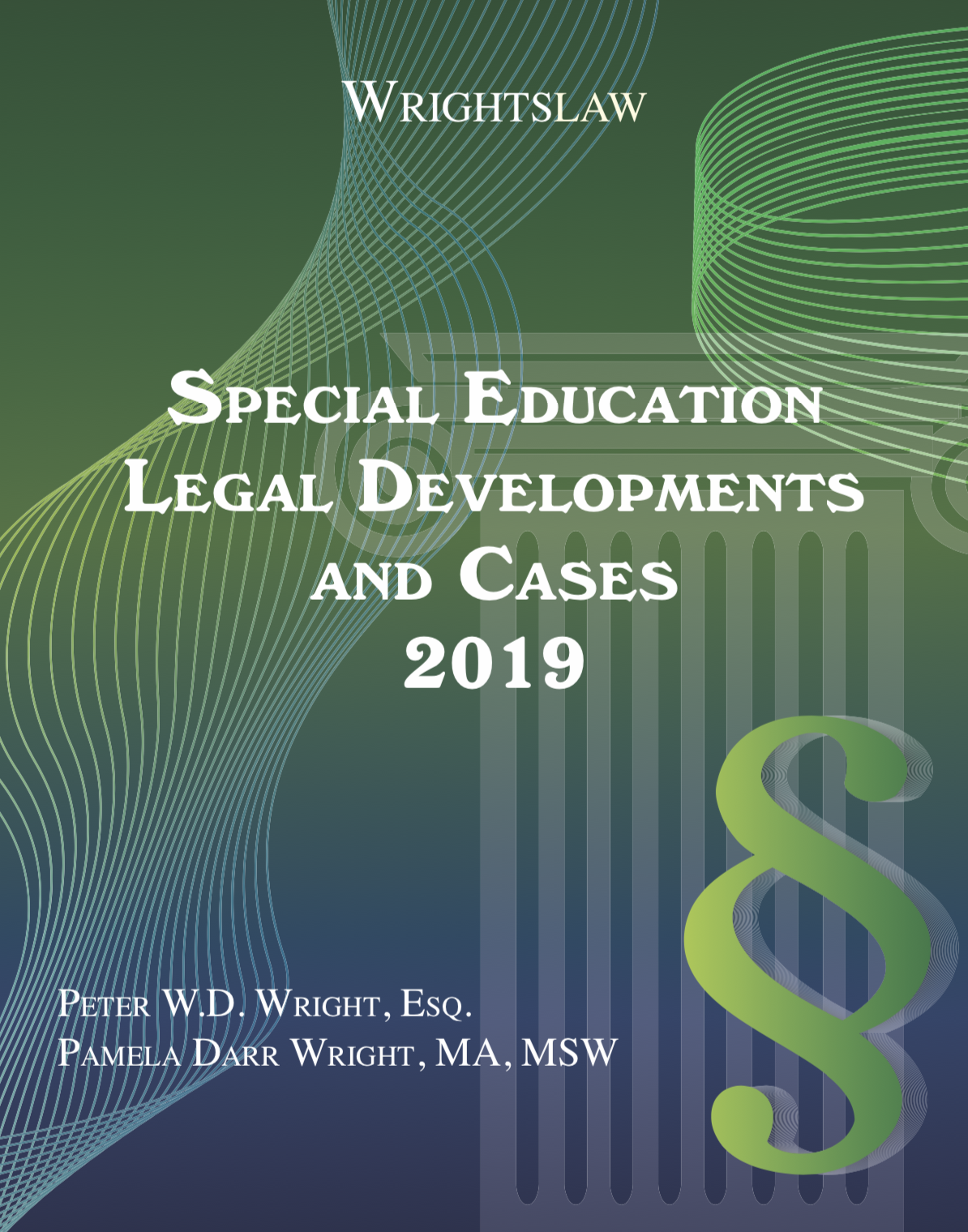
Endrew v. Douglas County. On March 22, 2017, the Supreme Court in unanimously rejects the “de minimis” standard (read the Decision) for one that “is markedly more demanding than the 'merely more than de minimis' test applied by the 10th Circuit." In his opinion, Chief Justice Roberts says “a student offered an educational program providing ‘merely more than de minimis’ progress from year to year can hardly be said to have been offered an education at all." Read Pete Wright's analysis. Wrightslaw: Special Education, 3rd Edition by Peter W.D. Wright and Pamela Darr Wright is available from Harbor House Law Press as a print edition, an e-book and as a Print + E-book Combo.
Copyright © 1998-2026, Peter W. D. Wright and Pamela Darr
Wright. All rights reserved.
Contact Us |
Press l Mission l Our Awards l
Privacy
Policy l
Disclaimer l
Site Map |
||||||||||||||||||||||||||||||