|
|
|
Home > Topics > Special Education Advocacy > Alternate Diploma v. Regular HS Diploma - Which is Better? by Susan Bruce |
| |
Alternate Diploma v. Regular HS Diploma - Which is Better?
Don’t settle for an “alternate" certificate or diploma. You need to have high expectations for your daughter. If you lower your expectations, you risk extinguishing all possibilities for her. What can a parent do? First, know what the IDEA says about high expectations in the Purposes section of the law.
This should be done in order for your child to -
Second, you need to answer these questions.
Third, consider using a transition plan to address her needs for a regular diploma. Transition Planning Your child's IEP should include transition services no later than the first IEP in effect when she turns 16. The age for a transition plan may be younger, depending on your state’s special education regulations. Transition services are those services that will help your child make the transition into the adult world. Transition services should:
Post school activities may include any of the following.
Any transition plan should include transition services based on her individual needs. The IEP team should consider her preferences, interests, and strengths. What does she want to do? If your child wants to attend a college, she will need a regular high school diploma. Transition services include the following.
Transition services in the IEP must include:
Transition services can include special education, if your child needs specially designed instruction and/or related services to benefit from these services. When you think about transition planning, ask yourself these questions.
IEP teams can develop and use transition plans to help students with disabilities meet the high expectations set for all students. As with every other special education issue, make yourself an expert. Created: 01/12/11 Susan Bruce
Susan’s passion for assisting parents and extensive knowledge of the practical application of the Individuals with Disabilities Education Act along with other laws applying to children makes her a fierce advocate for students. The training she has received over the last ten years is second to none. Susan has trained under some the nation’s leading advocates and attorneys, such as Chris Ziegler Dendy, Rick Lavoie, Matt Cohen and Pete Wright of www.wrightslaw.com. A Board Member of COPAA (Council of Parent Attorneys and Advocates) for 4 years and a member for 7 years, she serves as the board secretary as well as serving on COPAA's executive committee. She also sits on the media relations, advocate and conference committees. Susan has honed her skills by attending COPAA’s National Conference for the last 7 years, presenting sessions at the last 6 and was asked by COPAA to provide the two day advocate training at their preconference for the last 3 years. She has a certificate from the William and Mary School of Law Institute of Special Education Advocacy and holds certificates in non-profit management from Duke and Winthrop University. However, Susan believes that her expertise actually lies in a specialized field that in all actuality can only be obtained by hands on experience and is not taught in any university setting. Susan continues to hone her skills by continually training, she believes that a vital part of advocacy lies in staying abreast of ever changing case law, scientific research and guidance from the US Department of Education and the Office of Civil Rights.
Susan Bruce receives their certificate from ISEA 2012 at the W&M Law School Institute of Special Education Advocacy for advanced advocates. Contact information 864-305-9969
|
||||||||||||||||||||||||



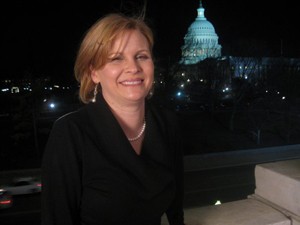 Susan’s most relevant experience is as the mother of four, three of which are students with disabilities. Susan’s next most relevant experience is as a ten year parent advocate and trainer with South Carolina’s former Parent Training and Information Center,
 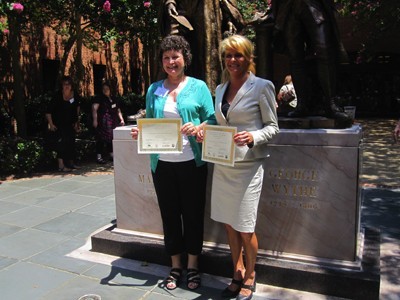 July 2012 - William and Mary Law School Institute of Special Education Advocacy