February 27, 2010
by Walecia Konrad
 WHEN it comes to special education, Becky McGee and her 19-year-old son, Kyle, feel as if they’ve seen it all.
And Ms. McGee hopes her hard-won lessons might benefit other parents.
Kyle was born with orthopedic and neurological problems. In elementary school he was found to have several learning disabilities that included severe dyslexia and attention-deficit disorder. Ms. McGee sought for years for her son to get the kinds of therapy and intervention that would help him succeed in his public school system in Yorktown, Va.
Throughout Kyle’s elementary, middle and high school years, Ms. McGee had to fight for the special services, particularly for a reading program for dyslexia that worked well for her son. She even enlisted the help of a lawyer who specializes in learning disability cases.
At one point, Ms. McGee and her husband, Chuck, decided to put Kyle in private school for two years before he went to public high school. They often paid out-of-pocket for reading therapies that schools could not or would not provide.
The roller-coaster ride ended well. Kyle is now enrolled at ECPI College of Technology, studying computer networking.
“Kyle is an amazing kid, and he’s doing great,” Ms. McGee said. “All I can say now is I’m glad public school is behind us.”
The McGees’ travails are hardly unique. More than 6 percent of school-age children — almost three million students — are receiving special education services because of learning disabilities, according to the Learning Disabilities Association of America.
The cost of such special services can easily total thousands of dollars a year per child. But the Learning Disabilities Association suggests that when learning disabilities are left untreated, the overall cost to society may be far higher.
That’s where federal special education law comes in. The Individuals With Disabilities Education Act, passed in 1990 as a successor to a similar law from 1975, is meant to give all children with learning disabilities an appropriate education in the least restrictive environment possible. Under the law, known by its acronym IDEA, parents are supposed to be active partners in coming up with the education plan that best fits their child.
Last week my colleague Lesley Alderman gave advice on how to get a proper diagnosis if you suspect your child has a learning disability. This week I’ll delve into ways to make sure your child is getting the educational help he or she needs.
KNOW YOUR RIGHTS “It’s really important for every parent with a learning-disabled child to understand the law thoroughly, so you know what your rights are and what services your child may be eligible for,” said Peter Wright, the education lawyer and advocate who assisted Ms. McGee.
Parents have extensive rights under IDEA, including the right to ask for an evaluation or a re-evaluation of their child at any time. Most important, however, is the parents’ right to be part of the team that decides what special education services and therapies the child will receive.
“The law was written with the idea that parents are equal participants in developing the child’s education plan,” says Ron Hager, senior staff lawyer at the National Disability Rights Network.
IDEA requires each child with a learning disability to have an individualized education plan tailored specifically to his or her needs. This could include services like speech and occupational therapy, reading intervention and a full-time aide in the classroom.
Exactly what services your child receives is supposed to be decided each year at your child’s individualized education plan meeting, which usually includes your child’s classroom teachers, a special education instructor, a school administrator and someone representing the school district.
Before attending such a meeting, you want to be as well informed as possible about your child’s specific disability and what services are provided in your state, says Pat Lillie, president of the Learning Disabilities Association of America.
“I can’t tell you how many times I’ve been the one to tell the school what’s exactly in the law,” Ms. McGee said. “After all, these are teachers and administrators, not lawyers. I always take a copy of the law with me.”
Ms. McGee suggests that when you meet with the school’s staff members about the individualized education plan, you take along a spouse or a good friend who knows your child well. Even in the best cases, these meetings can be extremely emotional, Ms. McGee said.
“The specialists and administrators are on the other side of the table telling me my son is behind on this, he can’t do that, he’s not up to speed on such and such,” she said. “It’s all helpful information, but it’s still difficult.”
GETTING MORE What if you’ve successfully secured an individualized education plan but are convinced your child needs more intervention?
Let’s say the child has fine-motor problems but isn’t receiving occupational therapy. Or perhaps the child goes to occupational therapy once a week but you think three times a week is more appropriate.
If your child is not making progress, you do have the right to question the plan. You may request an individualized education plan meeting at any time. (This request is best done in writing, by certified mail.) At the meeting, you can make your case for more services.
“Anytime you’re asking for more, that’s when you’re going to get into an argument,” Ms. McGee said.
In part, schools might be resistant because the extra services cut into already tight budgets. Aside from the cost, each side at these meetings can be territorial.
“There can definitely be tension between the parent and the school,” said Ron Hager, senior staff lawyer at the National Disability Rights Network. “You as the parent know your child best, but the teachers and administrators see themselves as the experts.”
Your best defense? First, listen to the educators; they might know what they’re talking about. But parents should also become experts themselves. You’ll need to learn about your child’s specific disabilities and the treatments and therapies that work for his or her issues, Mr. Hager advised. Then you need to make a compelling case to your child’s individualized education plan team.
If you find that the school is not acknowledging problems that you know are interfering with his or her learning, you may have to ask to have your child re-evaluated. To expedite this process, parents often pay for a private evaluation themselves, costing $500 to $5,000, depending on the tests.
Finally, said Ms. McGee, “you have to think creatively.”
When Kyle was in elementary school, for example, he had been turned down for occupational therapy. The school argued that it was a medical need, which is not covered by IDEA, rather than an educational need.
“But the law says the child should be provided the support needed to get through the academic day,” argued Ms. McGee. “Lunch is part of the day, and Kyle needed to be able to hold his lunch tray.” McGee succeeded in her argument, and Kyle received occupational therapy.
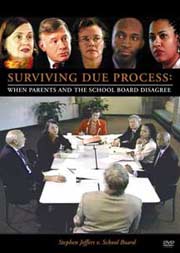
HITTING AN IMPASSE If you cannot reach an agreement with your child’s school, you have the right to a due process hearing, after which an administrative officer or judge makes a ruling on the dispute. This is when you want a lawyer or professional advocate by your side.
“If you’ve taken your fight this far, you want to make sure you’re getting the best chance for success,” said Olga Pribyl, managing lawyer for the special education office at Equip for Equality, an advocacy center in Illinois.
Nudging Schools to Help Students with Learning Disabilities York Times